Francisco Sá Carneiro Airport (OPO) is the main airport in northern Portugal. It is close to Porto city center and directly connected to the motorway network. Renting a car allows you to combine a stay in the city with day trips to the coast, inland towns or the Douro Valley. A car is also useful for families or people carrying luggage. By booking in advance, you'll generally get better prices and a wider choice. Goldcar operates at Porto airport with a regularly renewed fleet. Additional equipment such as child seats, satellite navigation systems and extra drivers can be added. Roadside assistance is available, and express pick-up reduces waiting times. The vehicles comply with the Clean & Safe standards set by Turismo de Portugal.
Why rent a car at Porto airport?
The center of Porto is easy to reach on foot, but many destinations lie beyond the streetcar or metro lines. A car will take you to the Atlantic coast in twenty minutes. Matosinhos and Foz do Douro are the closest, while the A28 leads further north to Vila do Conde and Viana do Castelo. The Douro Valley is around 90 minutes to the east. By car, you can stop off at the vineyards and small towns along the way. Guimarães and Braga are both less than an hour from the airport. The Peneda-Gerês National Park is less than two hours away, providing access to mountain roads and traditional villages. The A41 ring road connects directly to the main roads: A1 to Lisbon, A3 to Braga and Spain, A4 to Vila Real and the Douro, and A28 to the north coast. Compared with public transport, the car saves time and offers flexible itineraries.
Types of vehicles and options available at Porto airport
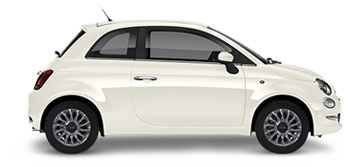
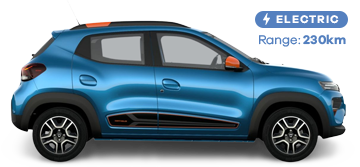
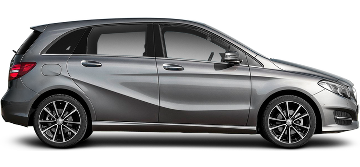
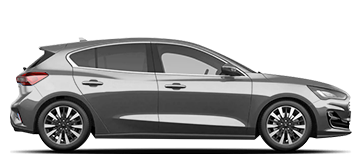
Goldcar's fleet covers most needs. Small cars are easy to use in the city. Hatchbacks and station wagons offer more space for luggage. SUVs are suitable for trips to the countryside, but may be less practical in narrow streets or parking lots. People carriers are available for larger groups, but should be booked in advance during vacation periods. Automatic and hybrid cars are also available, but in limited numbers. Extras include child seats, extra drivers and toll transponders for electronic payments. Portuguese law requires restraints for children under 12 or 135 cm tall. Insurances range from basic to full coverage, with reduced or waived deductibles.
Where can you pick up your rental car at Porto airport?
The airport has just one terminal. After baggage claim, follow the Car Hire signs to the arrivals area. Some service providers operate from inside the terminal, others from nearby depots, using shuttles. If your reservation includes a shuttle, follow the instructions on your confirmation. At the counter, present your driver's license, passport and a payment card in the name of the main driver. A deposit is held on the card. Before leaving, inspect the vehicle, take photos and check the fuel level. Leaving the airport is easy: take the A41, then the A28 or A4 for the city, the A3 north for Braga and Guimarães, the A4 east for the Douro, or the A1 south for Aveiro and Lisbon. For the return journey, follow the signs for the return car, refuel if necessary and allow time for inspection.
Explore Porto and surroundings by car
Within the city, Ribeira and Vila Nova de Gaia face each other on either side of the Douro River. Gaia is home to the Port Wine B&Bs. Foz do Douro and Matosinhos, twenty minutes to the west, combine beaches and restaurants. Guimarães, fifty minutes away by freeway, boasts a castle and an old town. Braga, forty-five minutes away, is famous for Bom Jesus do Monte and the Sameiro sanctuary. The Douro Valley can be reached via the A4 and A24 freeways. Peso da Régua and Pinhão are common stops, as the roads run alongside the river. To the south of Porto, Aveiro is about an hour's drive away, famous for its canals and nearby beaches. To the north, along the A28, Viana do Castelo and Caminha blend river and coastal landscapes. The Peneda-Gerês National Park is around ninety minutes away and requires caution on the narrow mountain roads. Closer to the center, the Serralves Museum offers modern art, and Porto City Park has free parking with access to the coast. With a car, you can visit several sites in a single day.
Tips for driving and parking in Porto
Portugal drives on the right. Speed limits are 50 km/h in cities, 90 km/h on country roads and 120 km/h on freeways. Speed cameras are common. The permitted blood alcohol level is 0.5 g/l. It is illegal to use cell phones while driving. Keep your driving license, passport, rental agreement and insurance details in the car. Freeways use both traditional toll booths and electronic systems. Ask for a transponder if you plan to use electronic tolls. In Porto's old quarters, one-way streets and pedestrian lanes are commonplace, which is why a GPS is so useful. Petrol is labelled 95 or 98 (gasolina), diesel gasóleo. Central parking lots such as Aliados, Ribeira and Batalha are reliable, with rates of one to two euros per hour. On-street blue zones are chargeable. Porto's city park offers free parking. Choose staffed or gated parking lots in busy areas, and avoid leaving valuables inside. The national emergency number is 112.
Best time to visit Porto
Porto can be visited all year round. Spring and autumn are mild and less crowded. From April to June, the days are longer, while September and October coincide with the Douro grape harvest. Summer is busier, with crowded beaches and greater demand for parking, but a car can still get you to quieter spots. Winter is cooler and wetter, but cafés, churches and wineries remain open, and car hire is generally cheaper. São João, at the end of June, is the city's main festival, with fireworks and riverside celebrations. During vacations and major events, book your car in advance.